
Stacking Chairs: How to Choose Durable, Comfortable Seating
October 21,2026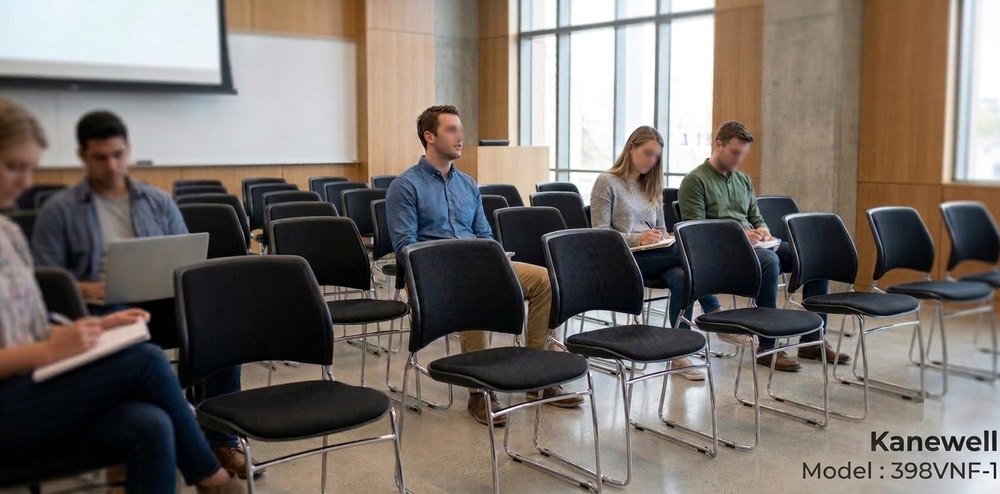
In campus classrooms and reception rooms where space is limited, choosing the right stacking chairs can make seating arrangements easier while reducing storage and maintenance demands. How should you choose the right materials? What are the ideal usage scenarios? This guide covers chair types, practical buying factors, and seating options for schools, offices, and event venues.
What Are Stacking Chairs?
Stackable chairs are specially designed to save space and allow flexible arrangements. Their structure enables multiple chairs to be securely stacked vertically for compact storage. They are ideal for classrooms, meeting rooms, cafés, churches, auditoriums, and other multipurpose spaces.
Both stackable and folding chairs help save space, but they use different storage methods and suit different needs.
Stackable Chairs vs. Folding Chairs
| Feature | Stackable Chairs | Folding Chairs |
|---|---|---|
| Storage | Stack vertically | Fold flat for storage |
| Setup | Ready to use without unfolding | Must be unfolded before use |
| Comfort | Available with contoured backs, cushions, or armrests | Depends on the model and padding |
| Best Uses | Classrooms, training rooms, churches, meeting spaces | Temporary events, backup seating, occasional gatherings |
| Key Consideration | Stack height and storage footprint | Folded dimensions and storage system |
(Swipe left or right to view the full table.)
Kanewell offers a range of stackable chairs with different frames, seat materials, and stacking capacities. For spaces that require frequent layout changes, the brand also provides flip-nesting chairs, which store horizontally rather than folding flat.
Kanewell Stackable Chair Collections
1. Sled Base Stack Chairs
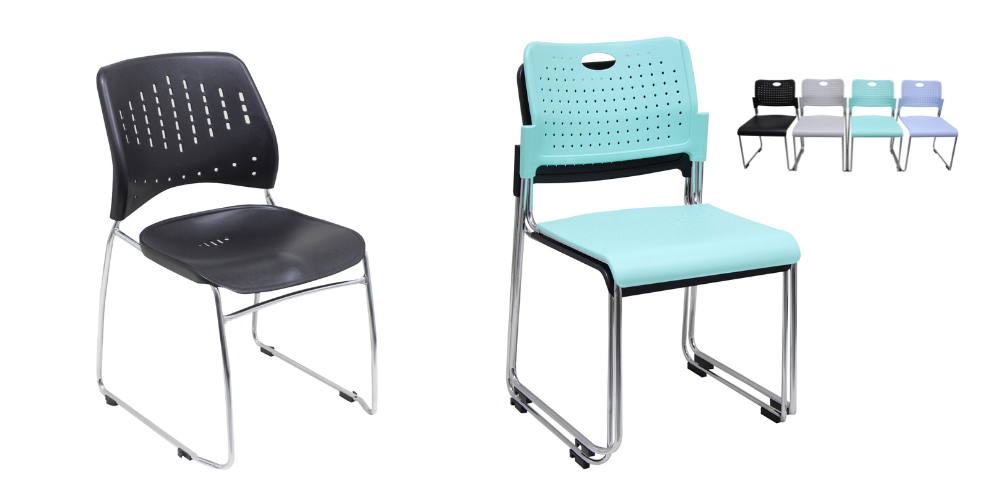
Designed for high-capacity seating, these chairs use reinforced steel frames and contoured polypropylene seats and backs. Selected models include ganging brackets that help maintain orderly seating rows.
【Models】347VNP-1 / 357VNP-1 and 398VNP-1.
2. Stack Chairs With Armrests
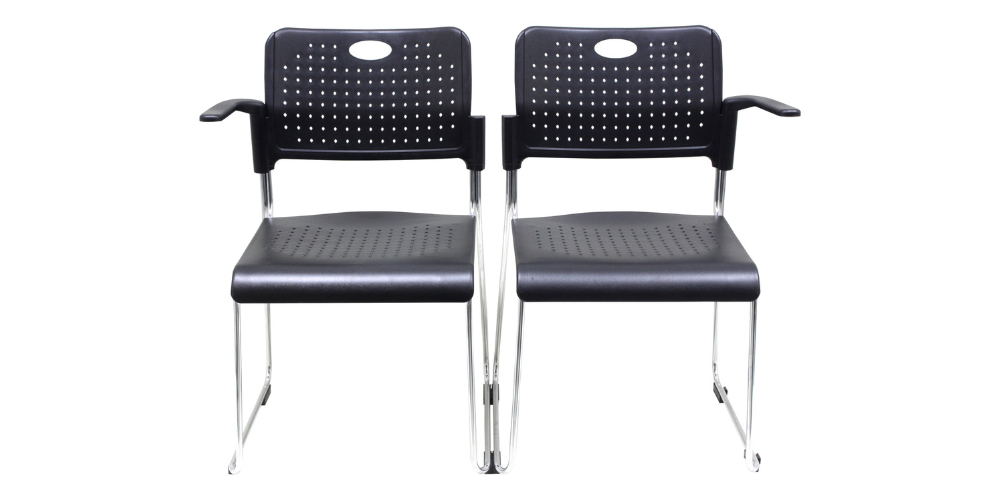
Armrests provide additional support when sitting down or standing up. These models suit waiting rooms, meeting areas, and other spaces where seating comfort and ease of access are important.
【Models】347VAP-1 / 357VAP-1.
3. Upholstered Stack Chairs
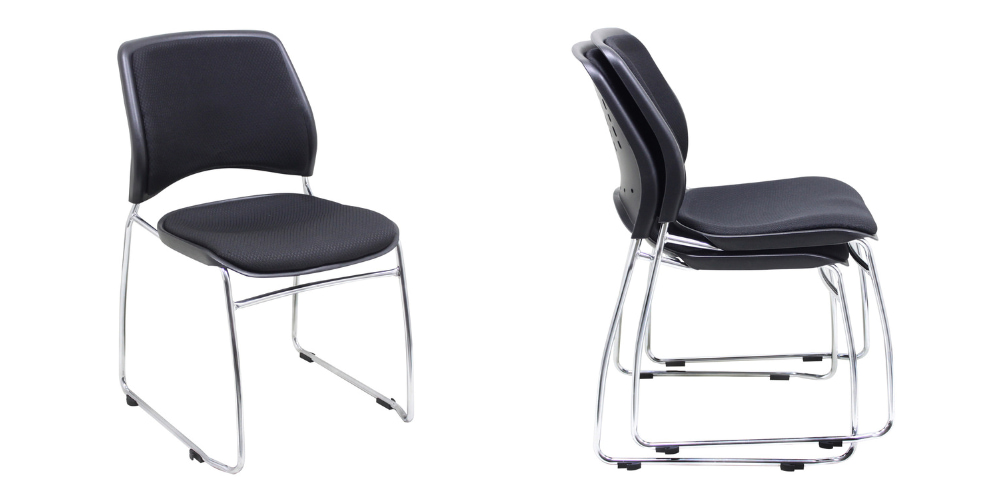
For longer meetings or events, padded seats and backrests offer a different seating experience from hard polypropylene surfaces. Buyers should also consider fabric cleaning and maintenance requirements.
【Models】398VNF-1.
4. Café Stack Chairs
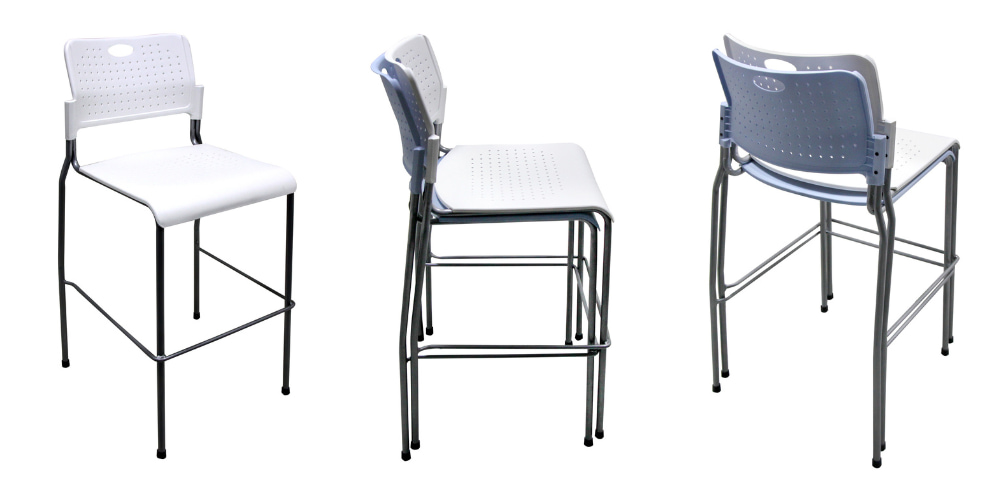
Café-height stacking chairs provide seating for counters and taller tables. Seat height matters: for example, the 367CNP-1 has a 28-inch seat height and stacks up to six chairs.
【Models】367CNP-1.
5. Flip-Nesting Chairs
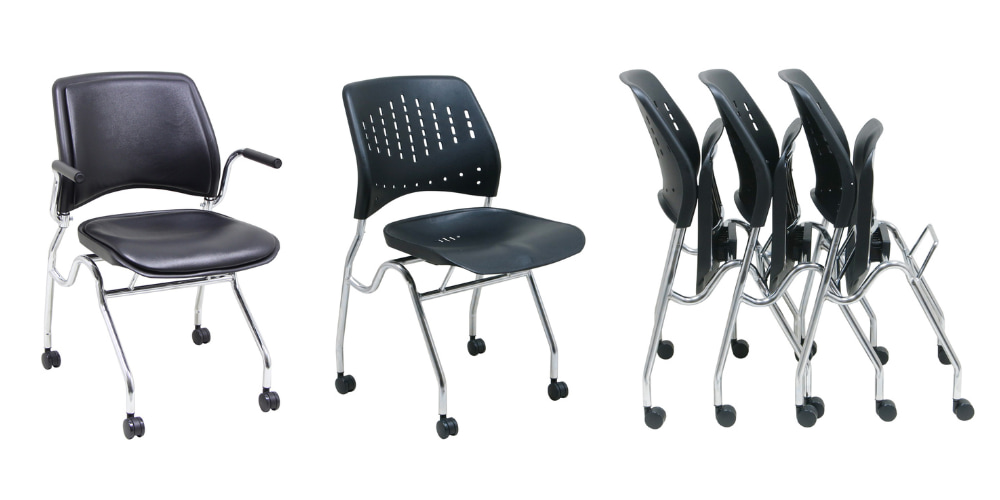
Unlike vertically stacked chairs, flip-nesting models allow multiple seats to be stored in horizontal rows. They are useful in training rooms where chairs need to be repositioned frequently.
【Models】397RAV-3 and 397RNP-3.
Best Stacking Chairs for Different Spaces
1. Schools and Classrooms
In schools, stackable chairs are a common sight in classrooms, lecture halls, and activity centers. Buyers should prioritize appropriate seat height, easy-to-clean surfaces, stable frames, and layouts that support individual work and group activities.
For example, Kanewell's 347VNP-1 and 357VNP-1 feature 17.5-inch seat heights, 300 lbs weight capacities, and manufacturer-stated stacking capacity of over 25 chairs. These specifications make them worth evaluating for appropriate classroom and institutional settings, subject to user fit and safe handling requirements.
2. Offices and Training Rooms
Reception and meeting areas in offices need to offer comfortable seating while maintaining efficient use of space. For training rooms, consider how often chairs must be rearranged, whether armrests are needed, and how easily the seating can be moved between sessions.
For frequently changing layouts, flip-nesting chairs may be more practical than vertically stacked models. Kanewell's 397RAV-3 and 397RNP-3 use a nesting design that allows chairs to be arranged in compact rows without building tall vertical stacks.
【Related Articles】How to Choose an Office Chair Manufacturer? Office Chair Selection Guide!
3. Cafés and Dining Areas
In cafés and dining areas, it’s not just about having enough seats—style and uniqueness matter, too. Buyers should also check seat height, table clearance, floor protection, and how easily surfaces can be cleaned after busy service periods.
For counter-height seating, verify the chair's seat height against the counter before ordering. The Kanewell 367CNP-1 has a 28-inch seat height and a chrome or painted steel frame. Outdoor placement should be considered only when the product's intended-use specifications allow it.
【Related Articles】Stool Supplier Recommendation – The OA Manufacturer from Taiwan
4. Churches, Auditoriums and Event Venues
Large venues need chairs that can handle repeated setup, high attendance, and frequent storage. Look for strong frames, secure stacking points, and suitable row-connection systems. Check aisle spacing and local occupancy requirements before finalizing a layout.
Kanewell's 398VNP-1 features a fully welded steel frame, front cross-brace support, and a 300 lbs tested weight capacity. Its 16+ stacking design makes it an option for venues that need to clear seating between events.
How to Choose Durable and Comfortable Stacking Chairs?
Comfort is especially important for prolonged use. A chair that looks suitable may still be difficult to store or maintain. Before ordering, compare structural strength, seating dimensions, materials, and stacking capacity.
1. Material and Structural Stability
When selecting plastic stacking chairs, the material is crucial for durability. We recommend polypropylene (PP), which boasts excellent impact resistance, abrasion resistance, and aging resistance—capable of withstanding frequent use and handling.
Fully welded construction with a front cross-support structure is preferred for applications where chairs are frequently moved. For example, Kanewell's 398 series includes models with 300 lbs tested capacities and ANSI/BIFMA listings. Confirm the applicable test standard and model documentation before purchasing.
2. Seat Comfort and Ergonomic Fit
Choose stacking chairs that are ergonomically designed, with backrests that conform to the spine’s natural curve, appropriate seat height and depth, and sufficient cushioning thickness to reduce fatigue. Chairs with uniquely contoured ventilation holes on the seat and backrest can effectively distribute body pressure, making long sitting periods more comfortable.
3. Seat Materials and Maintenance
Polypropylene is one of the most iconic materials used in plastic stackable chairs. It’s lightweight, waterproof and easy-to-clean, making it ideal for outdoor use. Metal frames provide structural support, while upholstered seats offer an alternative for longer sitting periods.
Stacking Chair Materials Comparison
| Material or Construction | Main Advantage | What to Check |
|---|---|---|
| Polypropylene seat | Easy cleaning and moisture resistance | Surface wear, impact resistance |
| Steel frame | Structural strength | Welding, corrosion protection, frame weight |
| Aluminum frame | Often lighter than steel | Joint strength, load rating |
| Upholstered seat | Cushioned seating | Stain resistance, fabric wear, cleaning |
| Plastic seat with metal frame | Combines easy cleaning and structural support | Frame joints, seat attachment |
(Swipe left or right to view the full table.)
For high-traffic areas, consider cleaning frequency and replacement needs alongside purchase price. A chair that is easy to wipe down may be more practical than upholstered seating in spaces where spills are common.
【Related Articles】Mesh Chair Is One of the Best Choices in the Office
4. Stacking Capacity and Storage
Stacking chairs should be lightweight and easy to carry and store. Some models feature handles or dedicated carts to facilitate easy movement and quick stacking.
For example, Kanewell lists 16+ stacking for the 398VNP-1 and over 25 chairs for selected 347/357 models. These figures should be confirmed against safe-use guidance before planning storage or transport.
What to Check Before Buying Stacking Chairs in Bulk
For bulk orders, compare more than unit prices. Check these four factors to avoid unexpected costs, delays, and maintenance issues.
- Specifications: Confirm seat dimensions, weight capacity, stacking limits, and applicable ANSI/BIFMA certifications.
- Product Consistency: Check available colors, replacement parts, and whether the same models can be reordered.
- Ordering & Delivery: Confirm minimum order quantities, production lead times, shipping arrangements, and sample availability.
- Warranty & Support: Review warranty coverage, maintenance support, and replacement procedures before purchasing.
【Related Articles】How to Bulk Buy Chairs? What to Consider
【Related Articles】How to Choose a Chair Supplier?
Stacking Chair FAQs
What Is the Difference Between Stacking and Nesting Chairs?
Stacking chairs are lifted and placed vertically on top of one another. Nesting chairs typically use a seat-flip or similar mechanism that allows them to store in horizontal rows. Vertical stacking often suits compact storage areas, while nesting designs can simplify frequent room rearrangement.
Are Stackable Chairs Comfortable for Long Meetings?
They can be, depending on the model and user. Seat height, backrest contour, cushioning, and arm support all affect comfort. For longer meetings, choose chairs with suitable dimensions, test samples where possible, and allow opportunities for users to change position during extended sessions.
How Much Weight Can a Stacking Chair Hold?
Weight capacity varies by model. Some Kanewell stacking chairs have a tested capacity of 300 lbs, but buyers should always check the specifications for the exact model being purchased. Commercial load testing and appropriate use are both important for safe seating.
Can Stackable Chairs Be Used Outdoors?
Only when the manufacturer specifies that the chair is suitable for outdoor use. Although polypropylene seating surfaces resist moisture, the metal frame, coating, fasteners, and other components must also be appropriate for the expected weather and storage conditions.
Find the Right Stacking Chairs with Kanewell
Kanewell has been deeply rooted in the furniture industry for over 30 years. As an ISO 9001-certified manufacturer, Kanewell offers stacking chairs designed for commercial use, with selected models tested to ANSI/BIFMA standards and a 3- to 5-year warranty on eligible products.
Whether you are furnishing classrooms, training rooms, churches, or event venues, compare seat dimensions, frame strength, stacking capacity, and maintenance requirements before ordering.
Want to make your space more versatile? Explore Kanewell's Stackable & Training Seating collection, or contact Kanewell with your seating quantity, intended application, and storage requirements to discuss suitable models and request a quotation.